2026年6月3日,美国总统签署第14411号行政令(Executive Order 14411,下称“EO 14411”)。与近年来围绕加征关税、原产地核查、强迫劳动执法等议题展开的贸易政策不同,EO 14411并未进一步提高关税税率,而是将改革重点放在进口监管制度本身,试图通过重塑登记进口商(Importer of Record)监管体系,提高进口主体的透明度和责任承担能力,从源头强化美国海关执法。
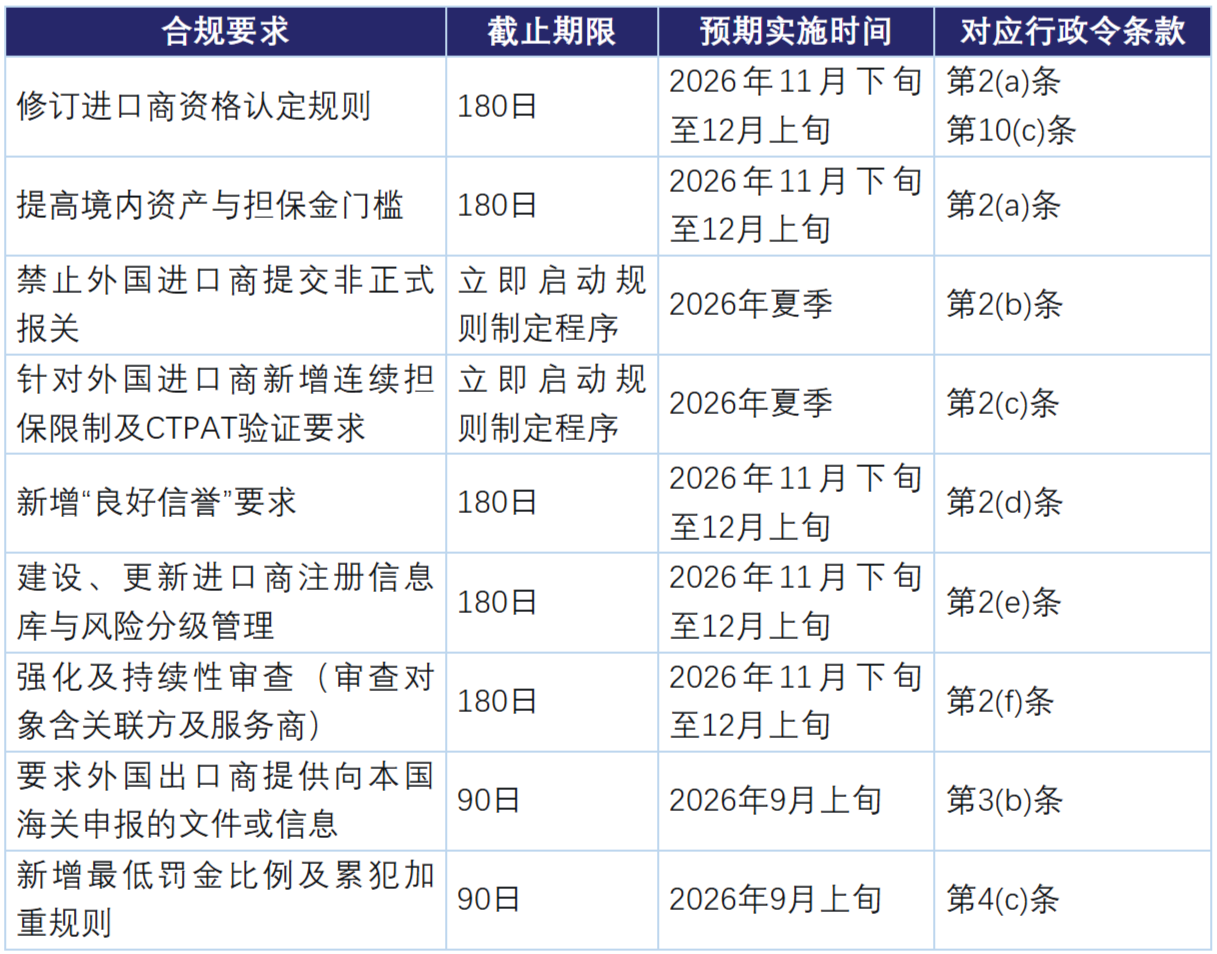
从行政令内容来看,本轮改革涉及登记进口商准入、持续合规管理、供应链信息披露、风险评级、海关担保以及行政处罚等多个方面,并要求美国国土安全部及美国海关与边境保护局(U.S. Customs and Border Protection,下称“CBP”)在未来90日至180日内陆续制定配套实施规则。
在该框架下,监管关注点正在发生结构性变化:不仅是“货物是否合规进口”,更是“进口主体是否具备持续合规能力,以及是否应被赋予进入美国市场的资格”。对于大量中国出海企业、出口电子商务企业而言,这一改革可能意味着进口架构、清关模式及供应链安排均需要重新评估。长期以来依赖较低合规成本开展美国进口业务的商业模式,也可能因新规则的实施而面临调整。
本文结合EO 14411的主要内容,对本轮改革的重点变化及企业应重点关注的实务问题进行分析。
一、主要变革及其时间点概览
尽管具体实施细则尚未完全落地,但美国海关加强严查的趋势已定。未来,外国登记进口商的准入门槛将大幅提高,历史合规记录(类似“良好信誉”机制)将成为核心硬性指标;[1]同时,“包税”“灰清”等灰色操作将被加速淘汰,传统低成本运作模式难以为继,[2]美国本土清关费用及企业整体合规成本也将显著攀升。
二、全面收紧对登记进口商的监管
从行政令所确定的改革任务来看,美国进口监管框架已经出现较为明确的调整趋势。本轮改革主要围绕以下四个方面展开:
1) 提高境内资产与担保金门槛
EO 14411第2(a)(i)条要求所有登记进口商将被要求维持一定水平的美国境内有形资产,或提供足额海关担保(customs bond),或两者结合,以确保CBP在发生关税追缴或执法需求时具备可执行基础。该机制实质上强化了登记进口商的“财务实质要求(financial substance requirement)”,使其从传统的程序性登记主体,逐步转向具备实质履约能力的责任主体。
2) 扩展进口披露和认证要求
EO 14411第2(a)(iii)条规定,所有登记进口商须向CBP提供额外的数据和身份信息,包括预期进口量、组织成立年份、所有权和实益所有权披露、业务关联披露、国内资产披露,以及CBP认为必要的任何其他数据,[3]以增强对进口商的全面了解,确保CBP监管的有效性。
EO 14411还在第3条指示CBP建立更高的进口披露和认证要求,包括登记进口商须证明其遵守关键供应链要求、披露外国税务和全球商业标识符,并提供详细的供应链和生产方法信息,例如制造商的产品标识符或关键规格(例如,成分、等级或尺寸)。[4]在该行政命令发布后的90天内(即2026年9月1日前),CBP应制定强制申报规定,要求外国出口商将其输美前向本国海关提交的全部单证及信息一并报送。[5]
3) 新增“良好信誉(Good Standing)”制度
对于日常贸易而言,EO 14411最具变革性的方面或许是在第2(d)条引入了针对所有登记进口商的“良好信誉”要求。这一机制的功能与中国海关使用的信用评级体系类似,企业的历史合规记录将直接决定其审查级别和市场准入权限。[6]EO 14411的“良好信誉”状态将根据登记进口商及其关联公司遵守美国海关和贸易法律的历史以及所需款项的支付情况来定义。至关重要的是,被发现非法进口芬太尼、等违禁物质及前体化学品的登记进口商将自动失去其“良好信誉”。[7]
未保持“良好信誉”的登记进口商将被禁止进口到美国或从事与货物进口直接相关的任何活动。[8]此外,根据第2(e)条,CBP将更新登记进口商注册库,清除不活跃实体,并根据合规历史、执法行动和审计结果创建基于风险的分级体系。[9]这一机制标志着美国进口监管正在从“事件驱动执法”转向“信用基础准入体系”。
4) 强化持续性审查程序
EO 14411第2(f)条新增定期复审制度,审查对象包括外国登记进口商的关联方、报关行、保税货物保管人以及货运代理。[10]该机制意味着监管范围将从单一登记进口商扩展至整个进口生态系统。
三、对外国登记进口商及低成本清关模式的实质影响
对于外国进口商而言,EO 14411最紧迫且重大的变化之一,是其直接针对历史上促成“灰清”和“包税”模式的机制开刀。这些灰色操作依赖于利用低价值非正式报关和连续担保来逃避严格的登记进口商问责,随着新规的落地,这些操作将逐渐失去可行性。
EO 14411对外国登记进口商(Foreign Importer of Record)模式的影响尤为显著。根据EO 14411第2(b)(i)条的规定,国土安全部被指示全面禁止外国登记进口商提交非正式报关(informal entry)。[11]此外,对于正式报关,外国登记进口商将不再能够依赖连续担保来满足入境要求,除非CBP认定税收得到了充分保护。他们还必须在海关-贸易反恐伙伴关系(CTPAT)计划中获得验证,或使用经过CTPAT验证和许可的报关行进行申报。[12]
该命令的定义也很重要。“美国登记进口商”必须满足特定的公民身份、居住地、组织、实益所有权和美国居留标准。不符合这些标准的实体将被视为“外国登记进口商”,并享有该身份现有的所有严格限制。[13]行政命令还指示美国国土安全部发布指导意见,以防止实体利用空壳公司、虚假交易或人为的公司架构来取得美国登记进口商的资格。[14]对于依赖最低要求的美国实体或类似合规安排的公司,一旦CBP发布实施指导,这一定义可能变得致命。一旦被视为外国登记进口商,企业将必须进入正式报关渠道并承担严格的资产和担保要求(如维持最低水平的美国境内有形资产)。
通过EO 14411,美国实际上对外国登记进口商关闭了低合规成本的进口通道,其结果是合规成本的显著上升和美端清关费用的增加。
四、加强执法与处罚机制升级
EO 14411项下的执法机制同样严厉。国土安全部被指示执行违约索赔、增加审计,并对不合规的报关行施加最高处罚。同时,对所有违规行为设定最低罚款比例及违约金下限,并特别强调对强迫劳动、错误分类等高风险领域的执法优先性。[15]另外,CBP必须在同一期限内加快并加强对不合规进口货物的扣押和处置。[16]该机制将显著提高违规行为的预期成本。
五、观察与建议
总体而言,EO 14411标志着美国进口监管体系正在发生结构性转型,其核心变化可概括为:从“货物流监管体系”转向“进口主体信用与能力监管体系”。在该框架下,进口商不再仅是交易执行主体,而逐步成为持续合规义务的承载主体。对于跨境贸易企业,建议重点关注以下方面:
1) 审查担保能力与美国境内资产结构
鉴于新规提高了最低担保额度要求,企业应立即排查现有资产架构是否满足财务证明标准,必要时需调整在美资产配置或增加财务投入,以确保持续符合海关执法与税款追缴的合规要求,保障进口业务不受中断。
2) 梳理实益所有权与供应链信息
企业应着手梳理所有权、实益所有权、关联关系及国内资产信息。相关披露信息料将成为认定进口商资格及美国海关审查的关键依据。
3) 进口商及其关联方应评估历史合规记录影响
即将出台的“良好信誉”标准预计将重点关注海关合规情况、关税债务缴纳记录以及更广泛的贸易法风险指标。凡存在过往海关违规记录的企业,应在CBP正式确立该标准前,评估是否需要进行整改或强化合规措施。
4) 采用外国登记进口商架构的企业应评估结构可行性
针对非正式报关的禁令及正式报关的附加条件,可能导致成本、复杂程度及运营风险显著上升。在某些情形下,企业应考虑转向合规的美国登记进口商架构是否具有可行性。
5) 报关行应评估其客户组合的合规风险
该行政命令对代表不合规客户或未能履行尽职调查的报关行施加最高处罚,这标志着报关行责任的实质性增加。
6) 持续关注后续海关执法更新
最后,国土安全部受命采取若干步骤以执行该行政命令中规定的更新政策。所有与进口商相关的各方均应继续关注本届政府关于海关执法的动态更新。
六、结语
EO 14411所推动的,并非单纯的执法强化,而是一场围绕“进口主体资格”的制度重构。在这一过程中,将对蓬勃发展中的中国出口电子商务行业产生影响。届时,合规不再是交易成本问题,而将逐步演变为市场准入门槛本身。对于跨境企业尤其是跨境电子商务企业而言,提前适应这一监管范式变化,将成为未来维持美国市场稳定运营的关键前提。
[1] Sec. 2 (d) Within 180 days of the date of this order, the Secretary shall require all IORs to maintain ‘‘good standing’’ with CBP, and CBP shall define ‘‘good standing’’ based on the IOR’s and its affiliates’ history of compliance with U.S. customs and trade laws and regulations and payment of required customs liabilities, among other relevant considerations.
[2] Sec. 2 (b)(i) Pursuant to …, and any other applicable law, the Secretary shall promptly issue, amend, modify, or rescind any relevant regulation, policy, or guidance to prohibit a foreign IOR from filing informal entry under regulations promulgated pursuant to 19 U.S.C. 1498.
[3] Sec. 2. Importers of Record. (a) … (iii) requiring that an IOR provide to CBP additional data and identification information, including anticipated import volumes, year organized, ownership and beneficial ownership disclosures, business affiliation disclosures, and domestic asset disclosures, and any other data that CBP deems necessary.
[4] Sec. 3. Import Disclosure and Certification Requirements. (a) The Secretary shall take steps to establish heightened import disclosure and certification requirements consistent with the policy of this order. These heightened requirements shall include certifying compliance with critical supply chain requirements like the Countering America’s Adversaries through Sanctions Act (Public Law 115–44), 18 U.S.C 545, and others to be determined by CBP, in consultation with the heads of relevant executive departments and agencies (agencies); disclosing certain foreign tax and global business identifiers; and providing detailed information about the imported good’s supply chain and production methods, such as the manufacturer’s product identifier (e.g., model or style number) or key specifications (e.g., composition, grade, or size). The Secretary shall enforce all applicable criminal fines and civil penalties in the event of noncompliance with these heightened requirements.
[5] Sec. 3. (b) Within 90 days of the date of this order, the Secretary shall take steps to establish a requirement mandating the submission of any documentation or information that the foreign exporter was required to submit to the foreign customs administration prior to exporting to the United States.
[6] 《中华人民共和国海关注册登记和备案企业信用管理办法(2026)》第三条 海关按照诚信守法便利、失信违法惩戒、依法依规、公正公开原则,对企业实施信用管理。
第四条 海关企业信用等级根据信用状况分为高级认证企业、认证企业、常规企业、失信企业和严重失信企业。
[7] Sec. 2(d) Within 180 days of the date of this order, the Secretary shall require all IORs to maintain ‘‘good standing’’ with CBP, and CBP shall define ‘‘good standing’’ based on the IOR’s and its affiliates’ history of compliance with U.S. customs and trade laws and regulations and payment of required customs liabilities, among other relevant considerations. For example, IORs that have been found by CBP to have illegally imported fentanyl, nitazene, or other illicit substances or contraband, including precursor chemicals for the purposes of manufacturing illicit substances, shall, consistent with applicable law, not be in ‘‘good standing’’ with CBP. IORs not in ‘‘good standing’’ with CBP shall not be allowed to import into the United States or otherwise.
[8] Ibid.
[9] Sec. 2 (e) Within 180 days of the date of this order, the Secretary shall update the IOR registry consistent with the policy of this order. These updates shall include removing inactive IORs; confirming active IORs are compliant with all applicable regulations and disclosures; and creating risk-based tiers
for IORs based on compliance history, enforcement actions, and audit results, among other things.
[10] Sec. 2 (f) Within 180 days of the date of this order, the Secretary shall establish enhanced vetting procedures, including recurrent vetting, for all individuals and entities seeking to conduct activities directly related to the importation of goods, including foreign IORs, affiliates of IORs, customs brokers, custodians of bonded merchandise, and freight forwarders.
[11]Sec. 2 (b)(i) Pursuant to … and any other applicable law, the Secretary shall promptly issue, amend, modify, or rescind any relevant regulation, policy, or guidance to prohibit a foreign IOR from filing informal entry under regulations promulgated pursuant to 19 U.S.C. 1498.
[12] Sec. 2 (c)(i) Pursuant to … and any other applicable law, the Secretary shall promptly issue, amend, modify, or rescind any relevant regulation, policy, or guidance to require for formal entry under 19 U.S.C. 1484 that a foreign IOR: … (2) be validated in CBP’s Customs Trade Partnership Against Terrorism (CTPAT), if determined by CBP to be eligible, or use a CTPAT validated and licensed customs broker to file entries with CBP.
[13] Sec. 10. (c) For purposes of the definitions of ‘‘U.S. IOR’’ and ‘‘foreign IOR,’’ the Secretary shall provide further guidance concerning the meaning of the term ‘‘located in the United States,’’ and such guidance shall prioritize preventing entities from using shell companies, sham transactions, or artificial corporate or organizational structuring in an attempt to qualify as a U.S. IOR. At a minimum, to be ‘‘located in the United States’’ an entity must have:
(i) its principal place of business in the United States;
(ii) a physical presence where significant business activity is conducted in the United States; and
(iii) sufficient tangible assets located in the United States, taking into account the size and scale of the overall operations of the company and whether the entity is an instrumentality of a foreign manufacturer without a substantial United States presence.
[14] Sec. 10. Definitions. For purposes of this order: (c) For purposes of the definitions of ‘‘U.S. IOR’’ and ‘‘foreign IOR,’’ the Secretary shall provide further guidance concerning the meaning of the term ‘‘located in the United States,’’ and such guidance shall prioritize preventing entities from using shell companies, sham transactions, or artificial corporate or organizational structuring in an attempt to qualify as a U.S. IOR.
[15] Sec. 4. (c) Within 90 days of the date of this order, the Secretary shall take steps to revise all mitigation standards consistent with the policy of this order. These revisions shall include establishing a minimum penalty floor of not less than 50 percent of the assessed penalty, absent exceptional circumstances that materially impact national security; establishing a minimum liquidated damages floor; and eliminating mitigation for repeat offenders.
[16] Sec. 5. Streamlined Disposal. Within 90 days of the date of this order, the Secretary shall, to the maximum extent permitted by applicable law, take actions to expedite and enhance the seizure and disposal of noncompliant imports. These actions shall include reducing or eliminating regulatory burdens to voluntary abandonment, increasing bond requirements for high-risk shipments, authorizing third-party disposal, and utilizing authorities under 19 U.S.C. 1612.