In July 2025, following validation by the Science Based Targets initiative (SBTi), Fangda formally committed to achieving the following targets by 2030, using 2024 as the base year (as below):
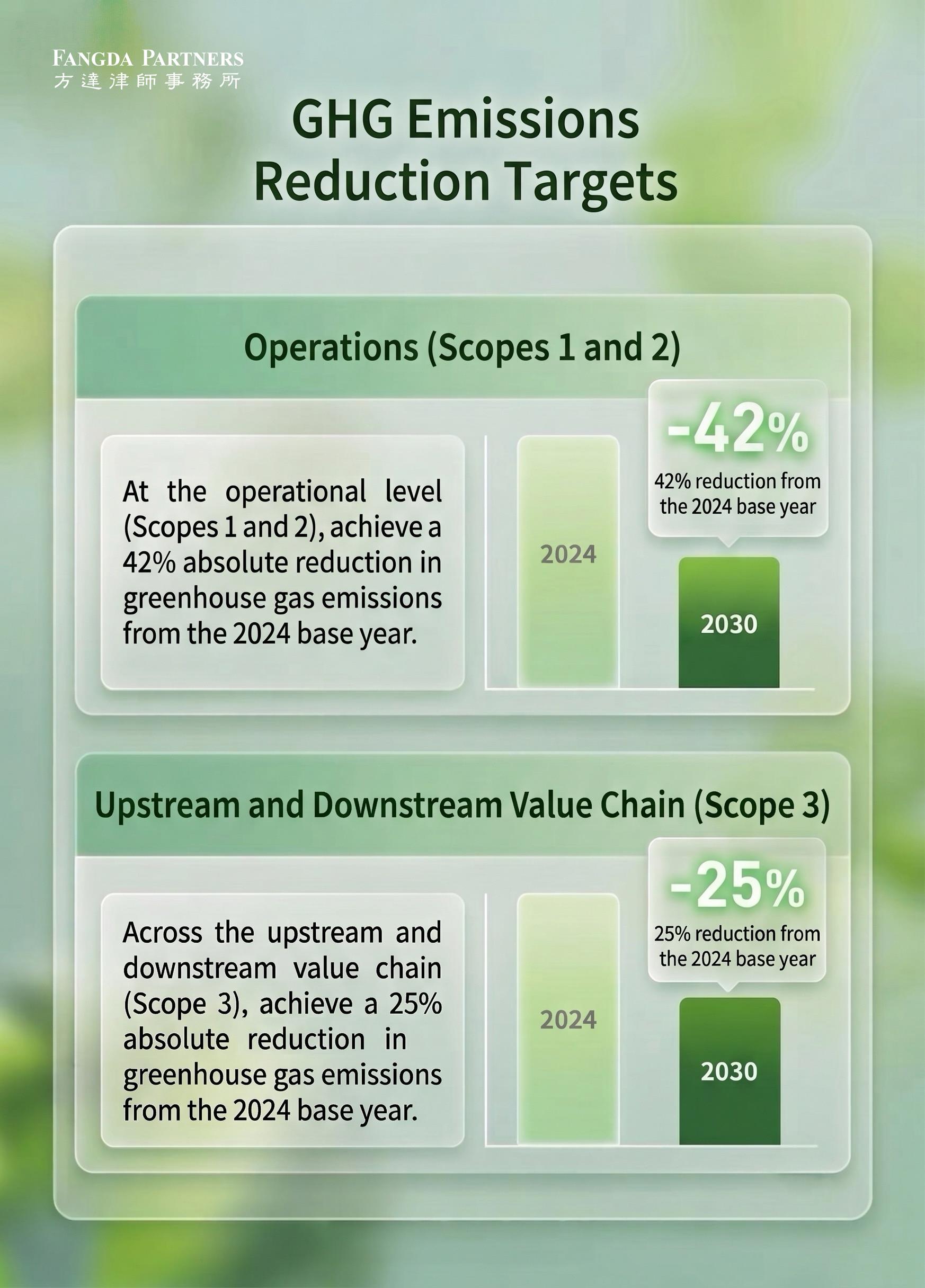
Based on the results of the 2025 greenhouse gas emissions inventory conducted by an independent third-party institution, Fangda Partners’ emissions reduction progress for 2025 is as follows:
Operations (Scopes 1 and 2): Fangda’s emissions amounted to 769.38 tCO₂e in 2025, representing an absolute reduction of 19.05% from the 2024 base year. Fangda calculates its Scope 2 emissions using the market-based method and applies the same methodology when tracking progress against its target. The reduction in Scope 2 emissions in 2025 was primarily attributable to a systemic decrease in the average carbon dioxide emission factors for electricity in the regions where Fangda’s offices are located. Improvements in the firm’s data collection and measurement processes also enhanced the accuracy of the results. Current progress remains aligned with the planned pathway towards achieving Fangda’s overall 2030 target.
Value Chain (Scope 3): Fangda’s emissions amounted to 4,425.61 tCO₂e in 2025, representing a reduction of 33.10% from the base year. Driven by significant reductions in emissions from purchased goods and services and waste generated in operations, Fangda has already met its target of reducing Scope 3 emissions by 25% by 2030.
Fangda will continue to advance its emissions reduction initiatives. These will include exploring the purchase of China Green Electricity Certificates to further reduce Scope 2 emissions, continuing to optimize procurement strategies, and promoting waste reduction at source to further decrease value-chain emissions. At the same time, as emissions from business travel increased from the base-year level, Fangda will make this a priority area for the next phase of its emissions reduction efforts. The firm will continue to explore lower-carbon and more efficient approaches to business travel management, steadily advancing towards the achievement of its 2030 science-based targets.